Every card currently banned or restricted in Modern, from the official Wizards Banned & Restricted list (as of August 10, 2026). Click a card to flip it and see when it was banned and why. Restricted means a deck may run at most one copy across maindeck and sideboard.
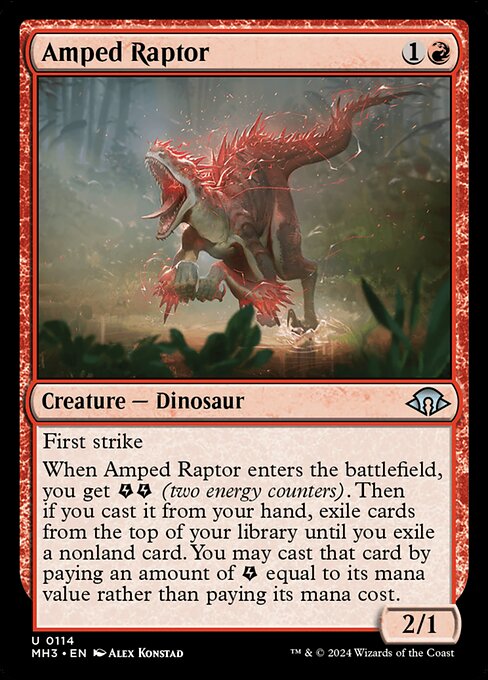
Banned to weaken the dominant Boros Energy deck, where its energy payoff often amounted to an extra one to four mana in the early turns of the game. Because it saw play almost exclusively in that deck, banning it let Wizards pull back Boros Energy without eliminating the archetype.
Announcement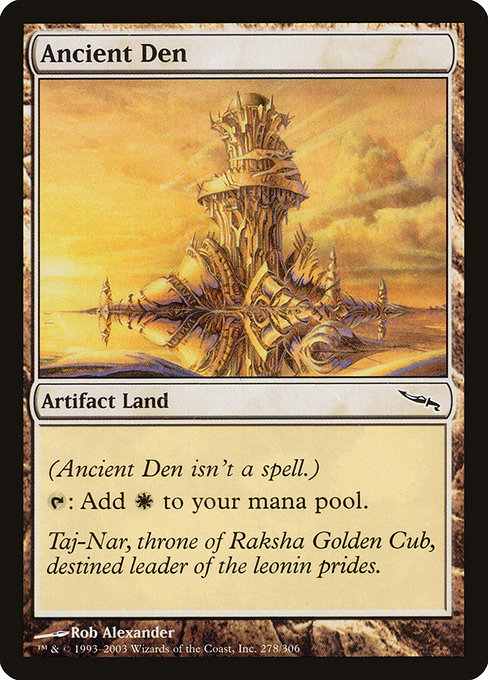
Banned since the format's creation along with the other Mirrodin artifact lands, which gave Ravager Affinity - one of the most powerful Standard decks of all time - tons of free fuel and combine just as powerfully with metalcraft. Wizards preferred banning the lands, the piece that breaks in both contexts, over banning Arcbound Ravager or Disciple of the Vault.
Announcement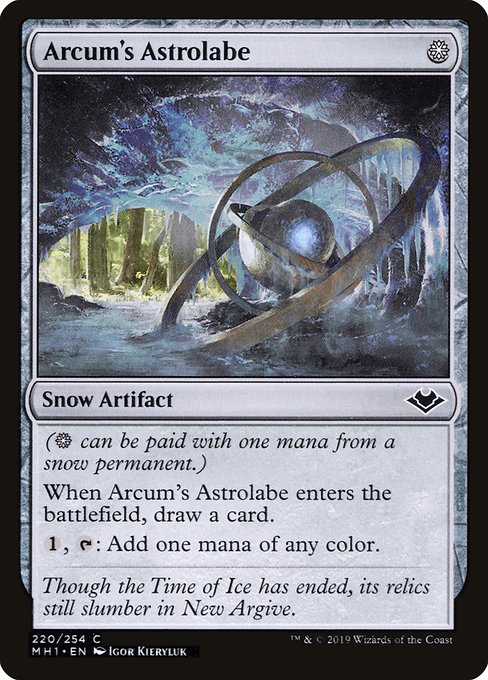
Multicolor 'good stuff' decks built around Arcum's Astrolabe rose in popularity because one Astrolabe often meant excellent mana for the rest of the game without costing a card. Wizards concluded it added too much to those decks for too little cost, producing unhealthy and unsustainable results.
Announcement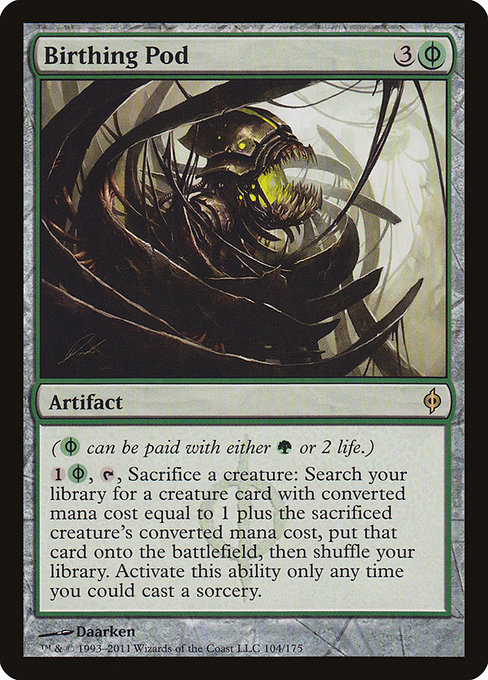
Over the preceding year Birthing Pod decks had won significantly more Grand Prix than any other Modern deck while suppressing other strategies. It was banned to restore diversity among midrange creature decks.
Announcement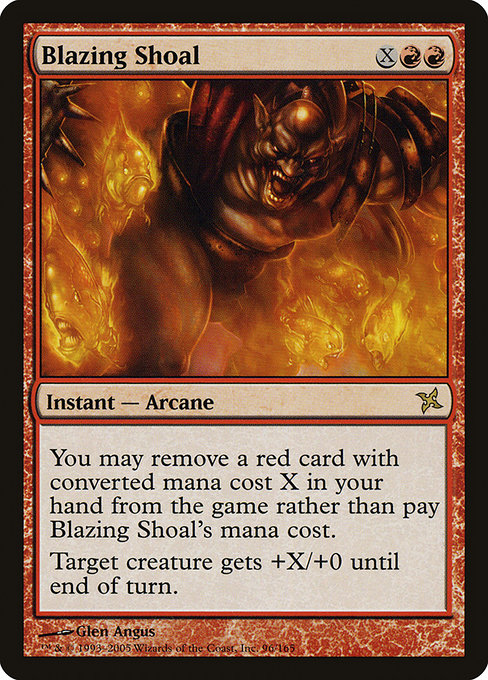
Blazing Shoal infect decks exiled cards with converted mana cost nine or more to deliver turn-two and turn-three kills, usually through Inkmoth Nexus or Blighted Agent, too consistently. This violated the format's goal of not having top-tier decks that consistently win on turn three or earlier.
Announcement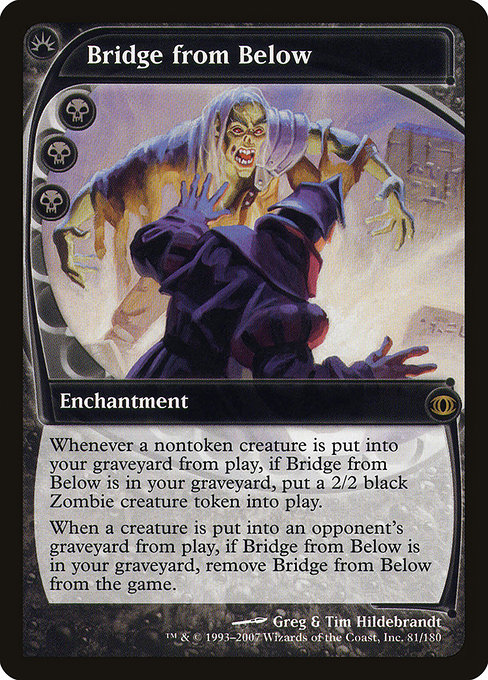
Banned to weaken the Hogaak Bridgevine graveyard deck, which warped the metagame around itself despite heavy anti-graveyard hate. Wizards singled out Bridge from Below because it costs no mana or resources to use, making it the card most likely to cause imbalance again as new graveyard synergies are printed.
Announcement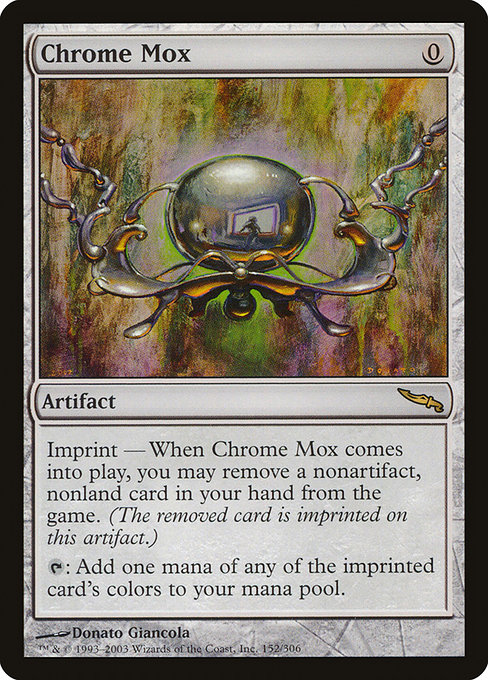
Banned since the format's creation as an extremely powerful fast-mana card - Wizards cited hard-to-beat first-turn starts like Chrome Mox into Dark Confidant or Bitterblossom and its role accelerating degenerate combo decks. It was judged to add too much speed to the format and make opening hands matter too much.
Announcement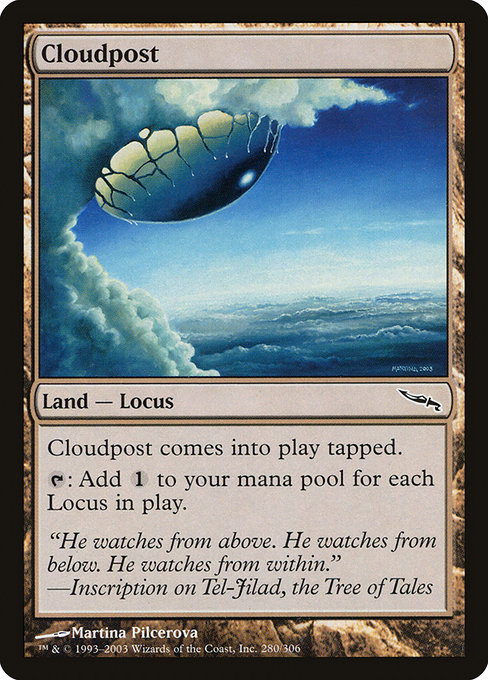
The threat of facing Cloudpost decks that could generate fifteen or more mana each turn starting on turn four kept many other decks out of tournaments, greatly reducing the format's diversity.
Announcement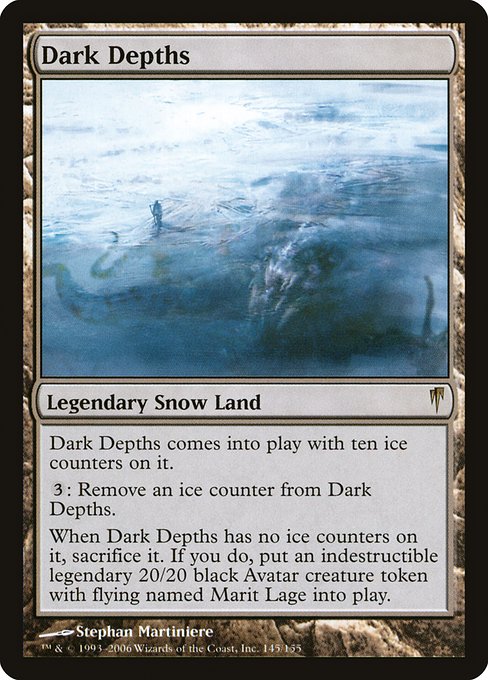
Banned since the format's creation because it combines with Vampire Hexmage to create a 20/20 indestructible flier for two mana, the core of one of the most dominant Extended combo decks (Thopter Depths). Wizards chose to ban the more offensive half of the pair, noting Vampire Hexmage has fair applications while Dark Depths has almost none.
Announcement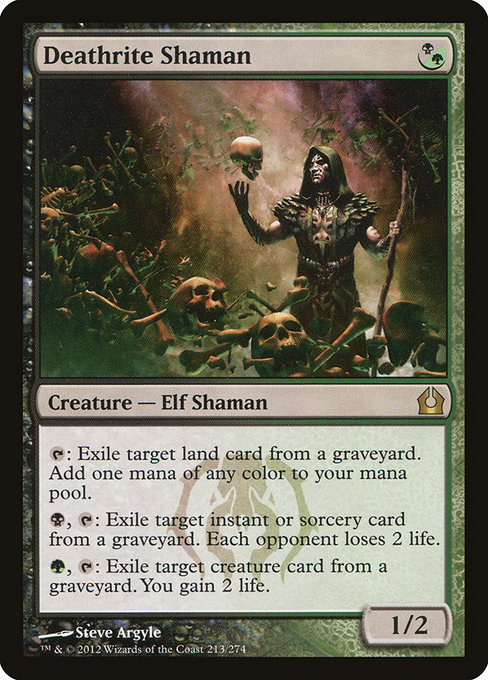
Black-green attrition decks were among Modern's best performers, and Deathrite Shaman gave them mana acceleration that stayed powerful at all stages of the game, letting them trade one for one too efficiently. Wizards banned it because a dominant attrition deck made synergy-based decks hard to play and to leave more room for innovation.
Announcement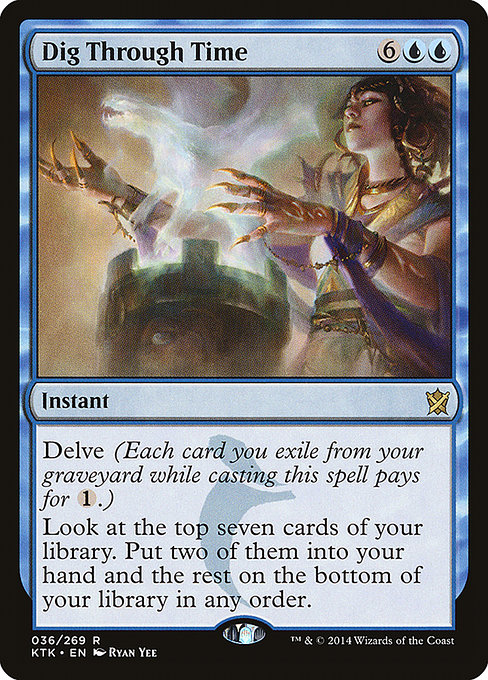
Banned alongside Treasure Cruise because the two delve draw spells were easy replacements for one another in the dominant blue-red Delver decks, so removing only one would not have fixed the format.
Announcement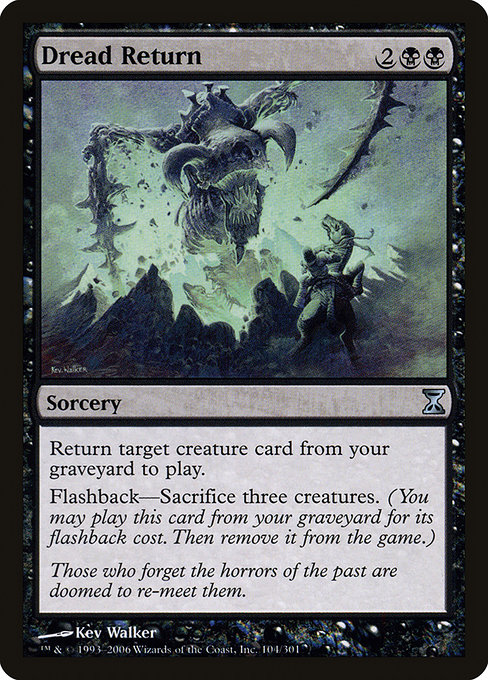
Banned since the format's creation because Dredge was still capable of turn-three kills even with Golgari Grave-Troll banned, and the sideboard 'subgame' Dredge forces is unsatisfying for most tournament players. Wizards banned the most explosive graveyard card rather than leave that dynamic in the format.
Announcement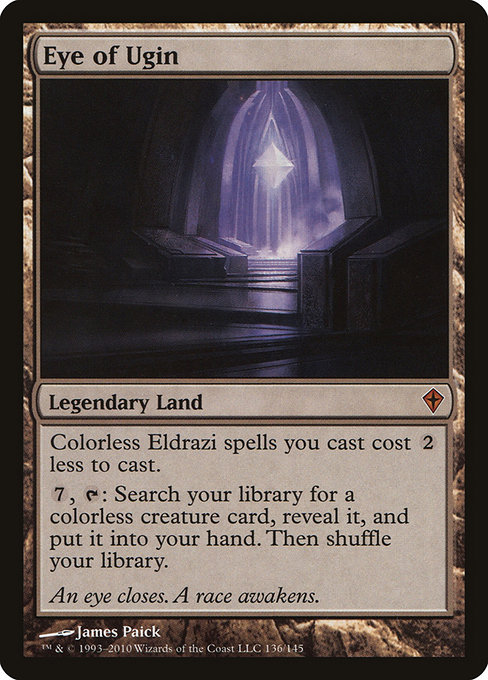
Eldrazi decks dominated after Pro Tour Oath of the Gatewatch, taking six of that event's Top 8 slots and fourteen of 24 Grand Prix Top 8 finishes one March weekend, powered by the mana acceleration of Eye of Ugin and Eldrazi Temple. Wizards banned Eye of Ugin rather than Eldrazi Temple because the remaining builds would be more diverse and beatable.
Announcement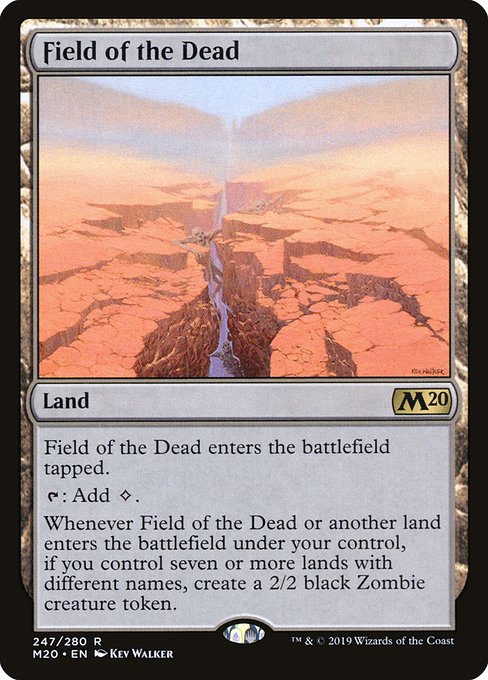
Banned because it creates repetitive and noninteractive game states in the late game for relatively low deck-building cost, reducing the diversity of gameplay patterns.
Announcement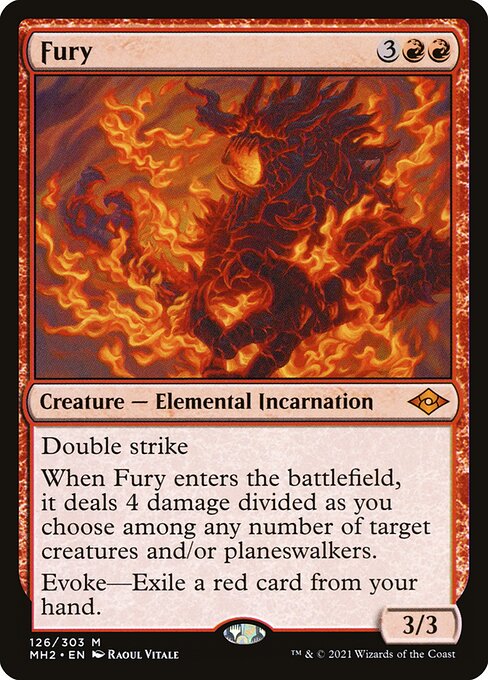
Banned because its free evoke removal made playing creature decks nearly impossible, with Fury a dominant presence in Rakdos Evoke and Four-Color Omnath decks that suppressed creature-based strategies.
Announcement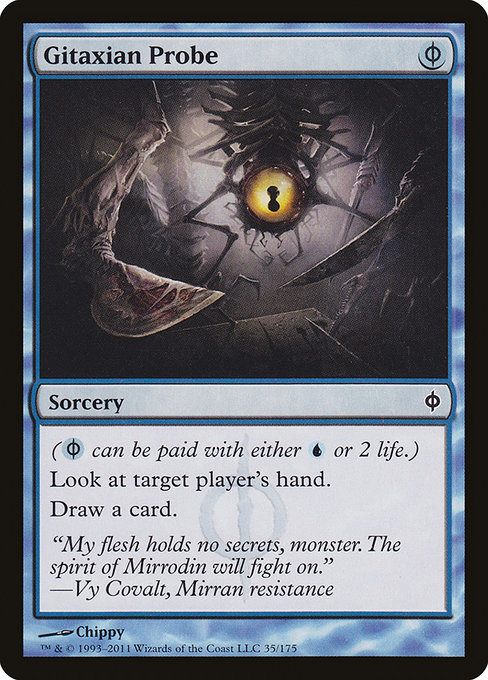
Gitaxian Probe increased the number of third-turn kills, particularly by giving perfect information and a replacement card to decks deciding whether to go all-in, which hurt reactive decks' ability to bluff. Wizards concluded the card did too much for too little cost.
Announcement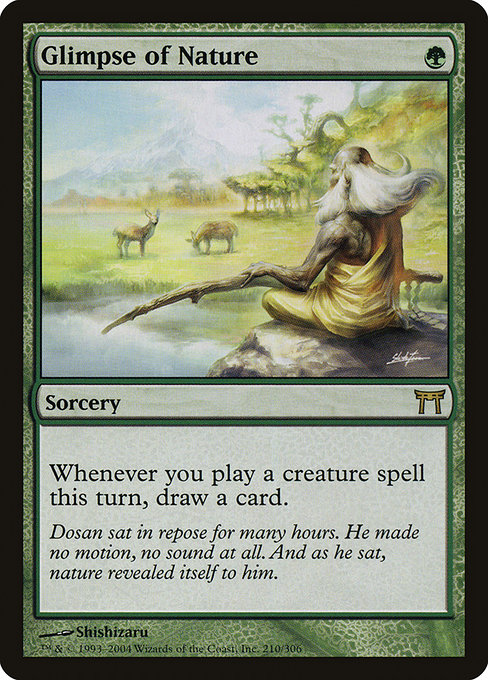
Banned since the format's creation as the engine of the Elves combo deck, which used Nettle Sentinel, Heritage Druid, and cheap Elves to produce enormous amounts of mana while drawing unbounded cards. The deck consistently killed on turn three, violating the format's speed rule.
Announcement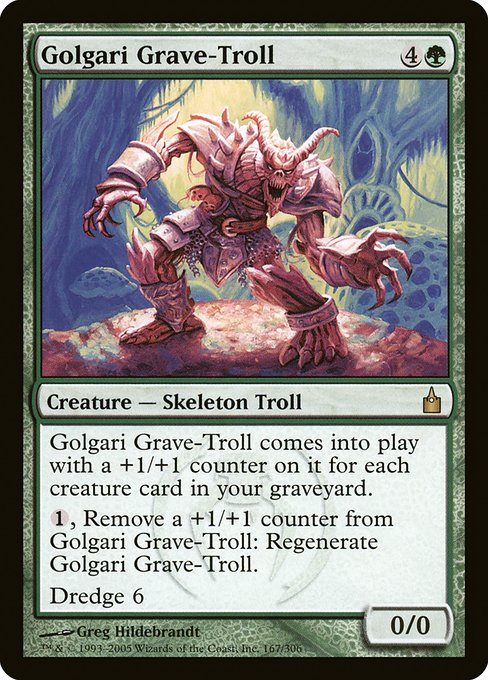
Dredge pushed Modern too far toward a battle of sideboards, and with the printing of Cathartic Reunion and Prized Amalgam the deck once again became unhealthy for the format. Wizards re-banned Grave-Troll, noting the real offender has always been the dredge mechanic itself.
Announcement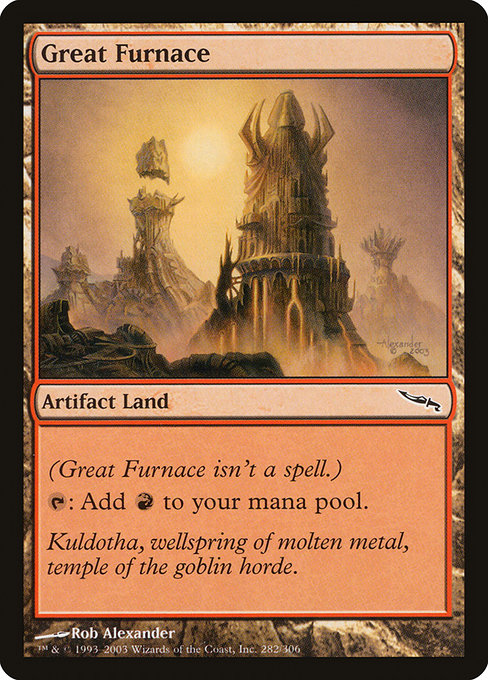
Banned since the format's creation along with the other Mirrodin artifact lands, which gave Ravager Affinity - one of the most powerful Standard decks of all time - tons of free fuel and combine just as powerfully with metalcraft. Wizards preferred banning the lands, the piece that breaks in both contexts, over banning Arcbound Ravager or Disciple of the Vault.
Announcement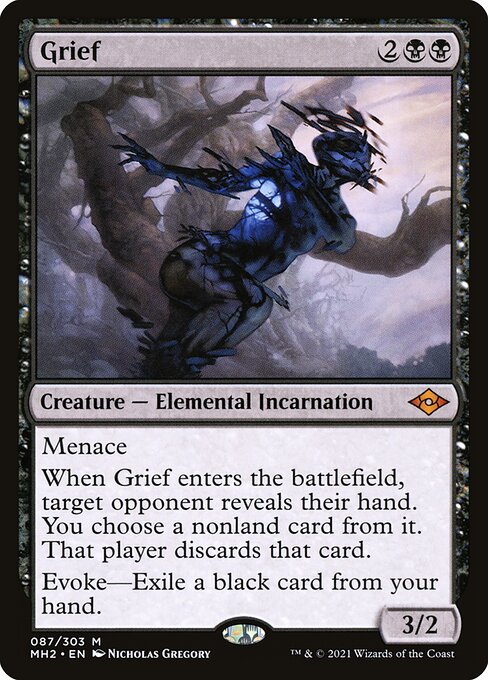
Long maligned as one of the least fun parts of competitive Modern - starting the game down two or three cards from the one-mana ways it can be returned is 'quite brutal,' especially after a mulligan. It remained a format staple abused by Mono-Black Necrodominance, Esper Goryo's Vengeance, Living End, Rakdos Midrange, and others, so it was banned to make the format more fun.
Announcement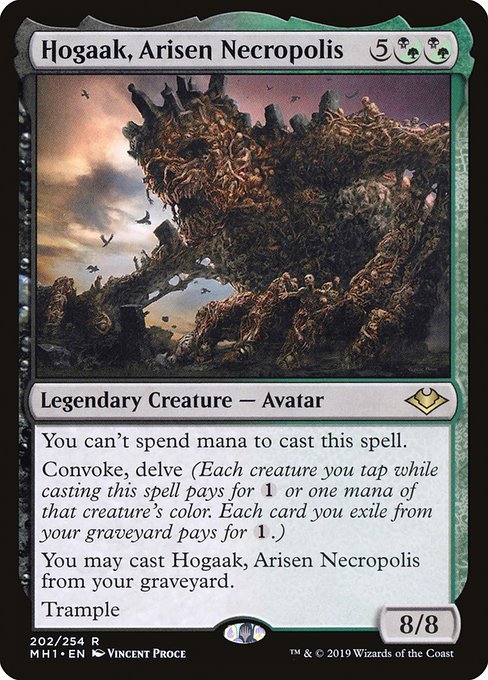
Even after Bridge from Below was banned to weaken it, the Hogaak graveyard deck kept an oppressive effect on the metagame. Given the variety of successful builds, Wizards concluded Hogaak itself was the crux of the problem.
Announcement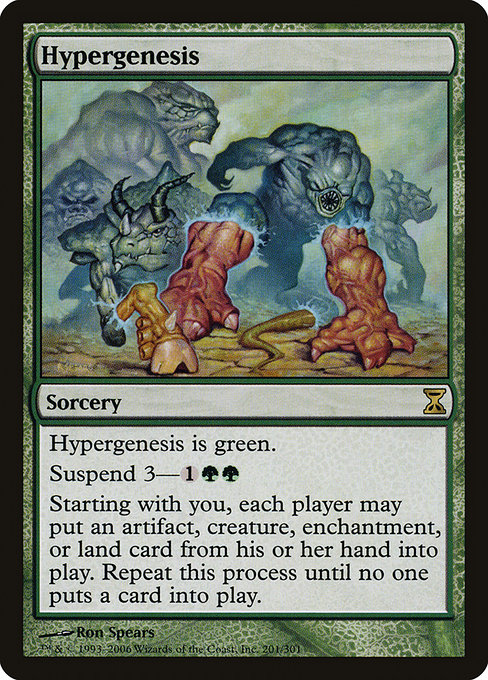
Banned since the format's creation because a three-mana cascade spell could cheat it into play as early as turn one or two, dumping enormous creatures like Emrakul, the Aeons Torn and Progenitus onto the battlefield. This clearly broke the format's rule against consistent turn-three kills.
Announcement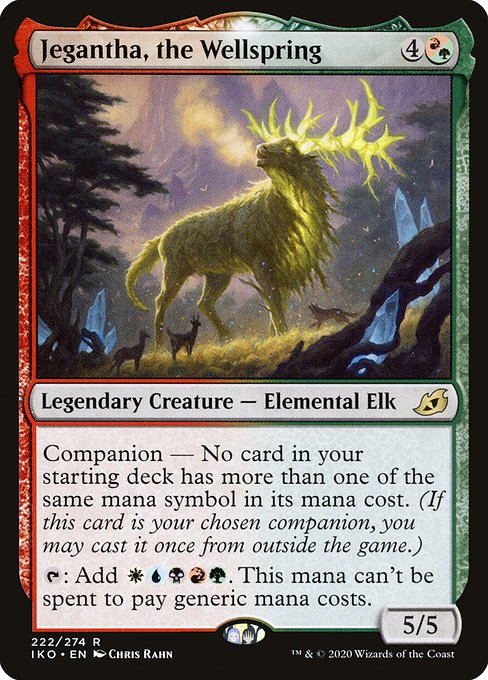
As a nearly free companion, Jegantha appeared in a large portion of Modern decks across many archetypes without meaningful deck-building cost. Wizards banned it because it reduced the pool of options players consider when building decks, pushing them to cut cards with duplicate mana symbols rather than make real choices.
Announcement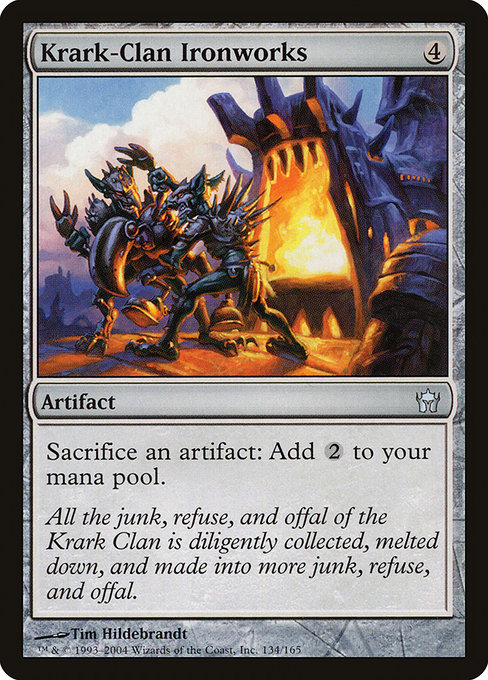
Ironworks combo posted more individual-play Modern Grand Prix Top 8 finishes than any other archetype despite being a modest portion of the field, and Wizards concluded it posed a long-term threat to competitive Modern. Its highly polarized game-1 performance, long turns, and excessively arcane rules interactions were cited as secondary factors.
Announcement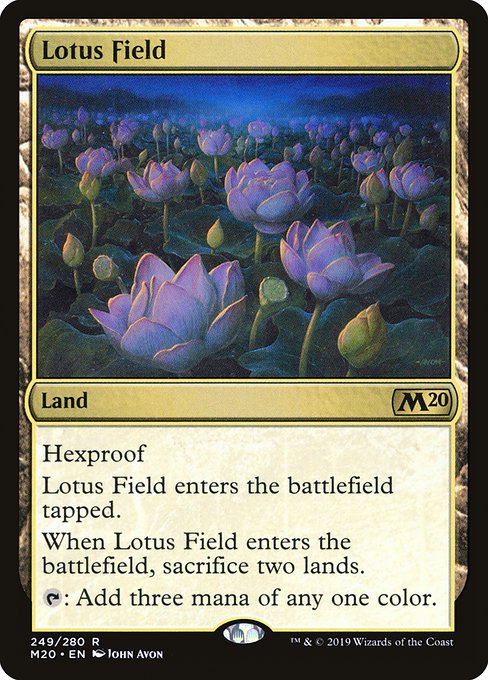
Banned to weaken the Amulet Titan combo deck, where it enabled mana loops with cards like Aftermath Analyst and Shifting Woodland - as the only Modern land that taps for three mana without other cards involved, it let the deck begin executing its combo from fewer resources. The resulting drawn-out, non-deterministic combo turns also created tournament logistics problems.
Announcement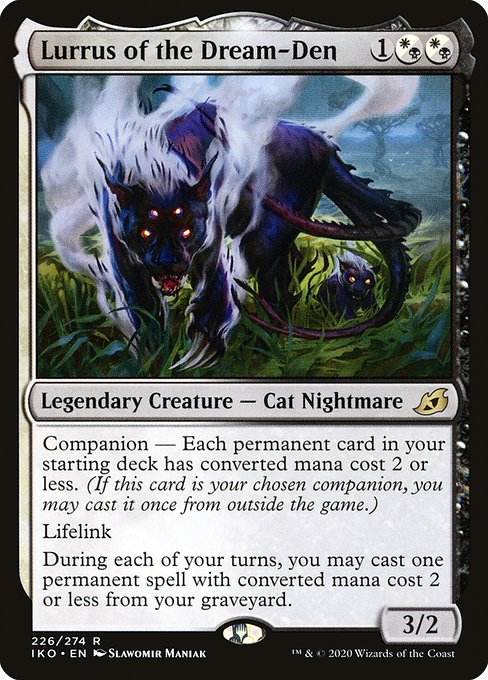
Lurrus remained ubiquitous across multiple archetypes, contributing to the homogenization of Modern. Wizards judged that for too many archetypes the companion was not a trade-off but purely additive, with no significant deck-building cost.
Announcement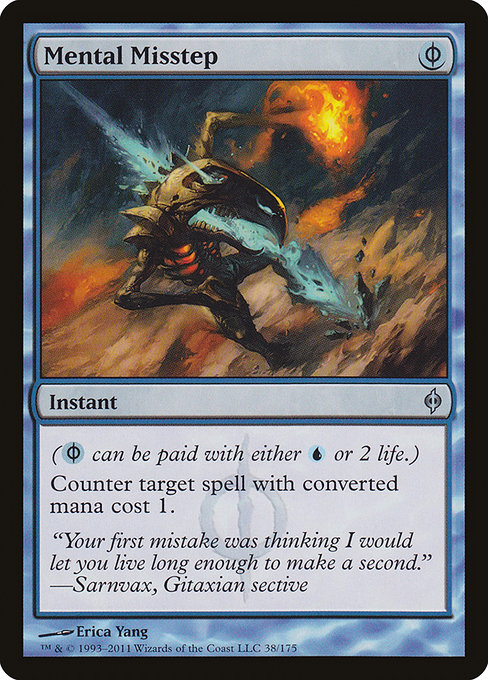
Banned since the format's creation - of Modern-legal blue cards it was the most played in Legacy, and Wizards judged it especially damaging in Modern by 'sitting on' beatdown decks that need their turn-one plays to function.
Announcement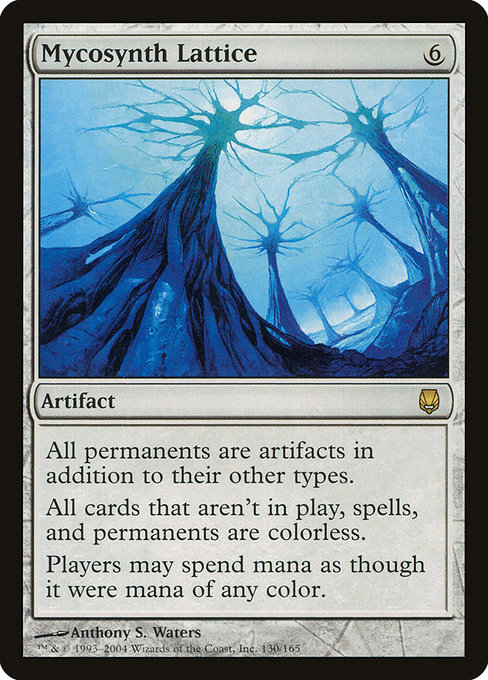
Its combination with Karn, the Great Creator, popular in Eldrazi and Tron decks, can completely lock the opponent out of casting spells. Because the deck-building cost of including the interaction is low, it showed up more often than is fun for the format.
Announcement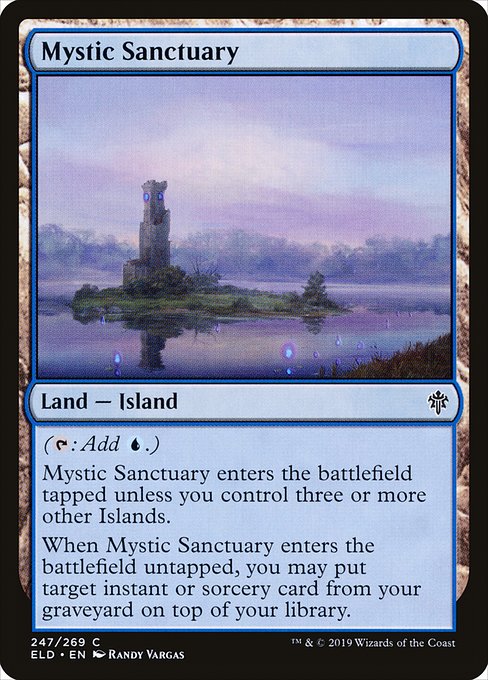
Banned because it creates repetitive and noninteractive game states in the late game for relatively low deck-building cost, limiting back-and-forth interactive gameplay.
Announcement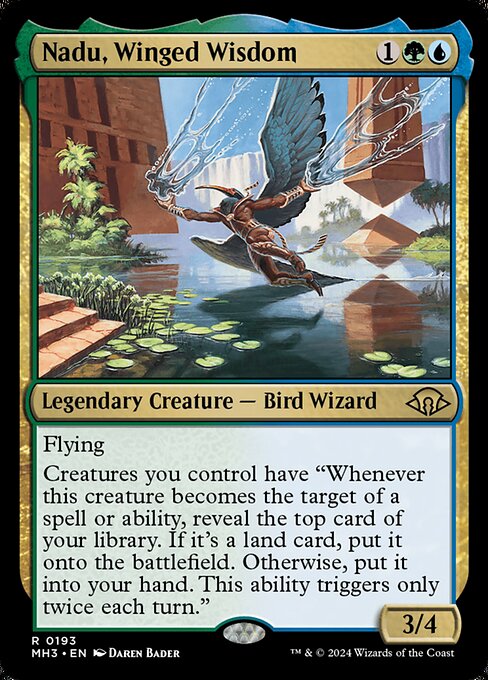
The Bant Nadu combo deck left Modern stagnant after Modern Horizons 3 - players knew a ban was likely, but also knew the best chance to win an event was playing Nadu, which Wizards called a poor experience for players, stores, and organizers. Nadu was banned for overshadowing much of what players could otherwise explore in the format.
Announcement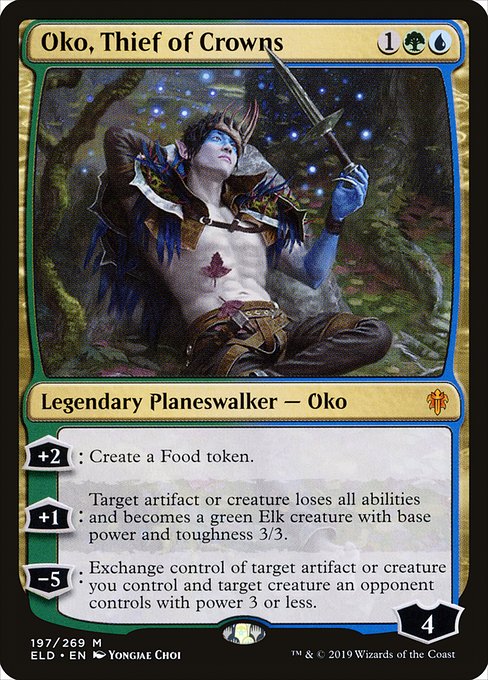
Oko became the most played card in competitive Modern and powered blue-green Urza decks with winning matchups against nearly every other popular deck. It was banned for reducing both metagame diversity and the diversity of gameplay patterns.
Announcement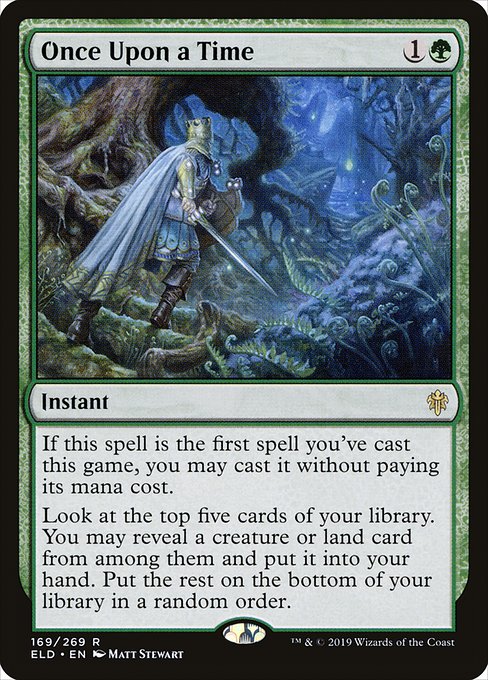
Once Upon a Time became one of the most played cards in Modern, letting several of the most popular and winningest decks enact their early-game plans far more reliably than other archetypes, leading to less divergent gameplay. Wizards also cited the ongoing design constraint of a free spell that makes creature and land combinations too easy to assemble.
Announcement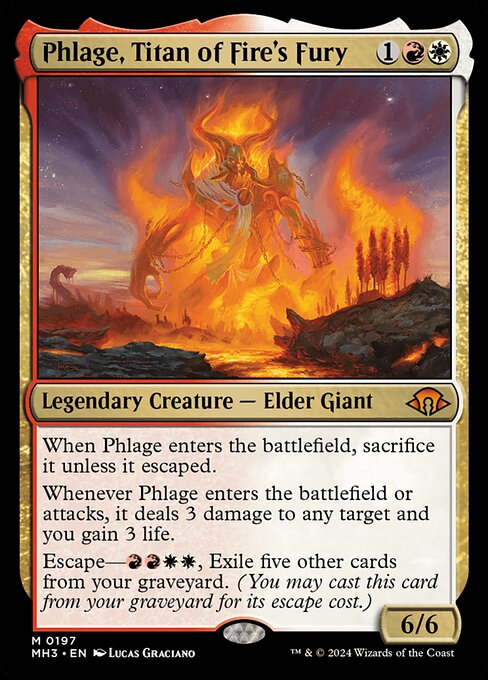
Banned because its pairing with Arena of Glory in Boros Energy decks proved game-warping, threatening massive damage or recurring Titan triggers from the graveyard while gaining life, with the deck playing progressively more copies of Arena of Glory. The combination compressed variation across aggro and midrange strategies.
Announcement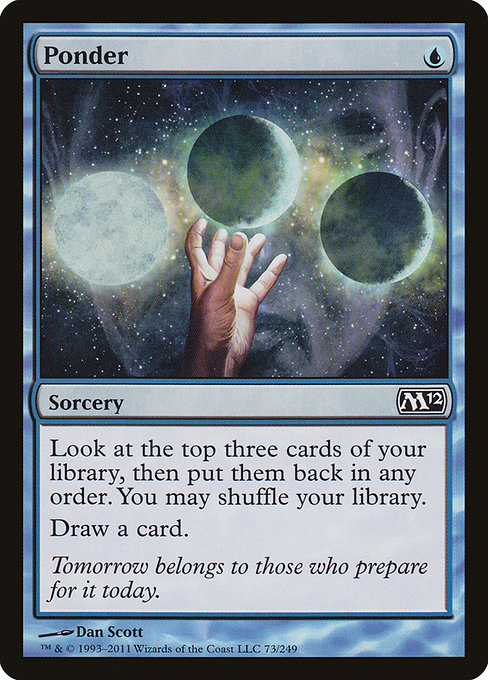
A large number of blue-red combo decks kept the field less diverse, and Ponder and Preordain were the most widely used cards for finding their combo pieces. Banning them was meant to make those combo decks less efficient without removing them entirely.
Announcement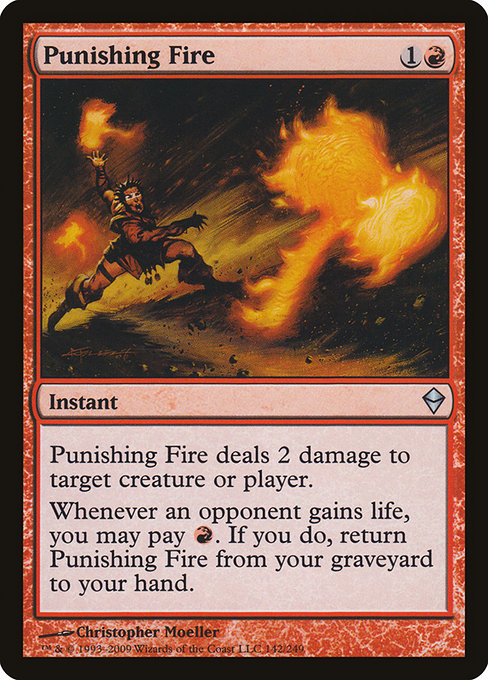
Combined with Grove of the Burnwillows, Punishing Fire gave a repeatable 2 damage for three mana that was devastating to creature decks relying on creatures with less than 2 toughness, such as tribal 'lord' decks. The DCI banned it as a major barrier to aggressive-deck diversity.
Announcement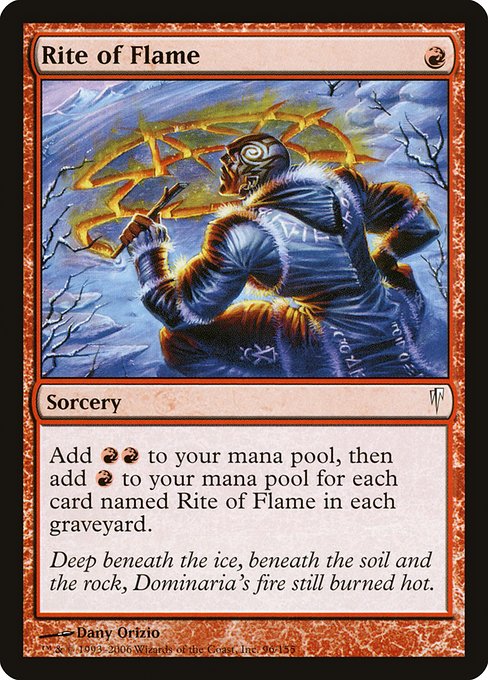
Rite of Flame was primarily used in combination decks to deliver very quick wins - at Pro Tour Philadelphia one such deck won nine of ten matches with extremely fast kills, conflicting with the format's goal of no consistent turn-three wins.
Announcement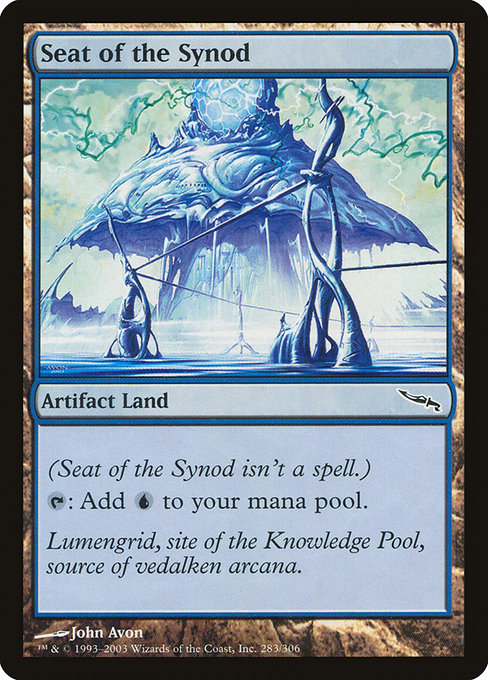
Banned since the format's creation along with the other Mirrodin artifact lands, which gave Ravager Affinity - one of the most powerful Standard decks of all time - tons of free fuel and combine just as powerfully with metalcraft. Wizards preferred banning the lands, the piece that breaks in both contexts, over banning Arcbound Ravager or Disciple of the Vault.
Announcement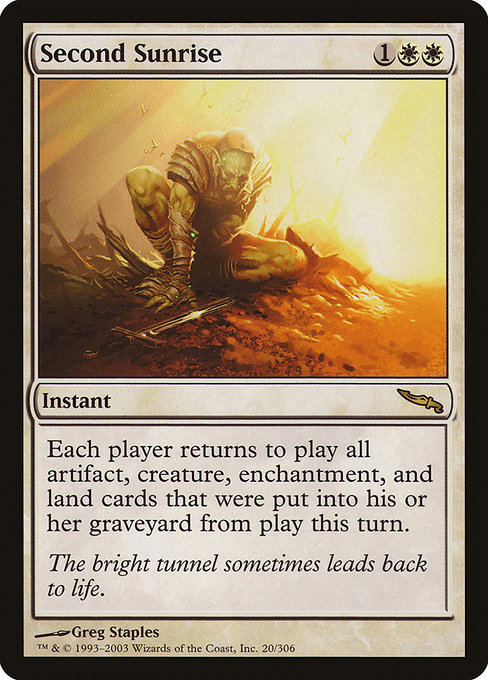
The Eggs deck used Second Sunrise loops to take single turns of fifteen minutes or more, causing rounds at large tournaments to run significantly long. The DCI banned Second Sunrise as the narrowest change that would reduce those long turns without hitting cards used in other decks.
Announcement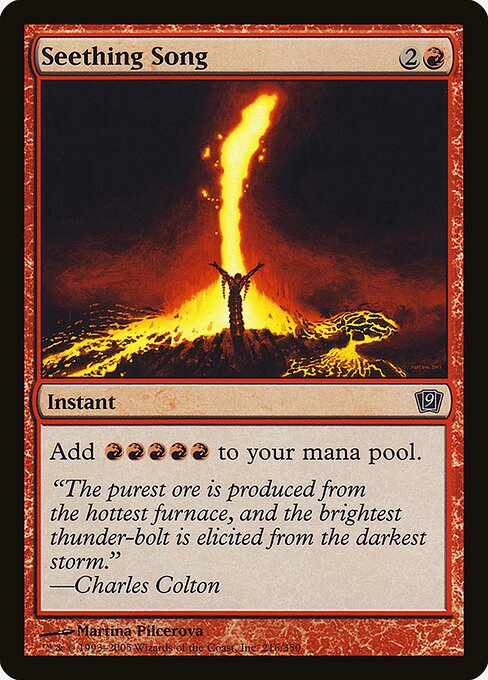
Storm had become a top-tier deck with frequent turn-three wins, contrary to the DCI's stated goals for the format. Seething Song was banned as the most efficient and reliable fast mana enabling those kills while not being one of the cards that makes the deck unique.
Announcement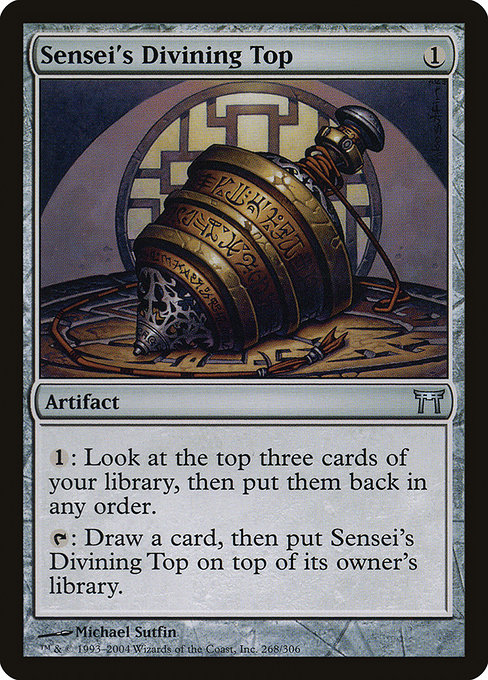
Banned since the format's creation because tournament data from previous Extended formats showed Sensei's Divining Top takes too long to play with, dragging rounds to time and making events less fun for everyone.
Announcement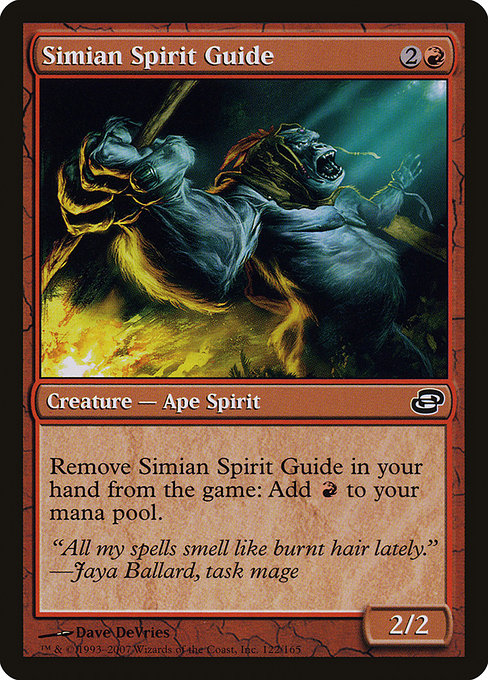
Banned for speeding up fast combo decks such as Oops! All Spells, Charbelcher variants, and Tibalt's Trickery builds. Removing it gives opponents more time to set up interactive plays in the early game.
Announcement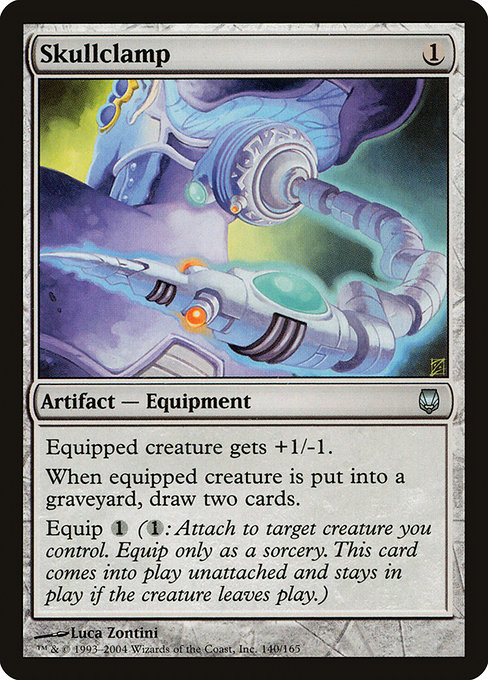
Banned since the format's creation - Skullclamp was already banned in Legacy for being too powerful, and since Modern is a subset of the Legacy card pool, Wizards banned it in Modern as well.
Announcement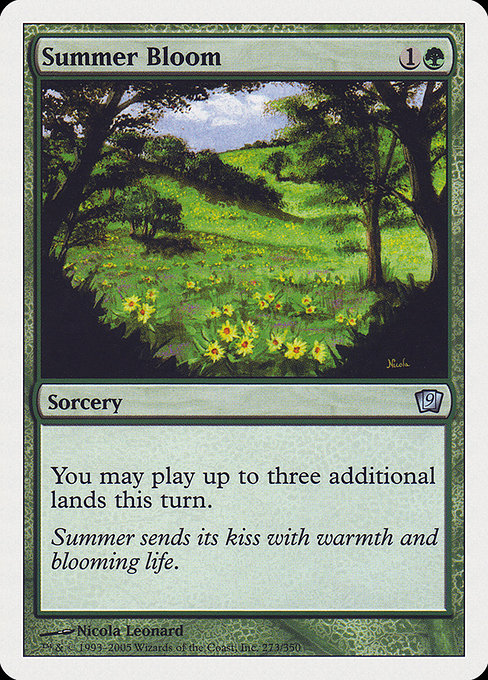
The Amulet Bloom deck frequently won before the fourth turn, generating seven mana on turn two via Amulet of Vigor, Summer Bloom, and bounce lands to end games quickly with Primeval Titan or Hive Mind. Summer Bloom was banned to reduce the frequency of those very early wins.
Announcement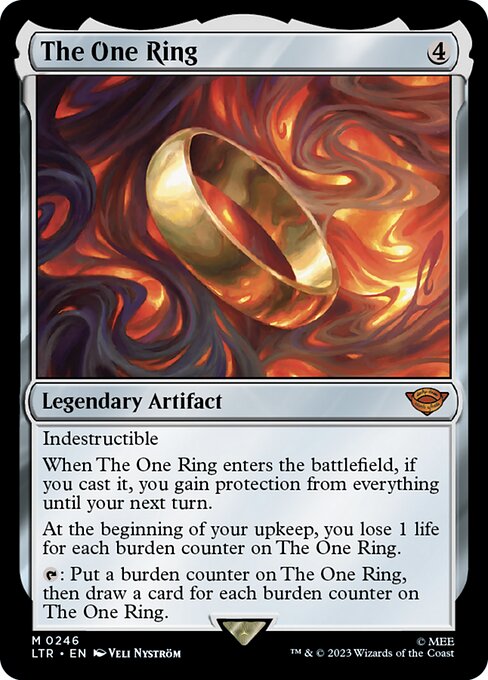
The One Ring became a staple of Boros Energy and numerous other strategies at minimal opportunity cost, providing both self-protection and card advantage with no color commitment. Wizards noted its presence in events had become tiresome for many players.
Announcement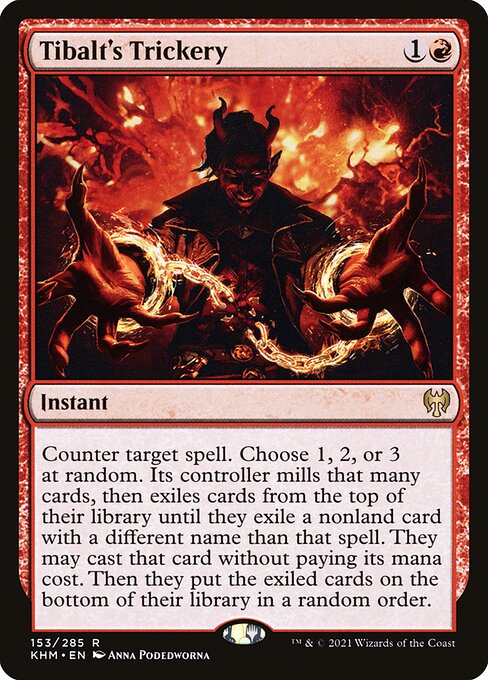
Although the decks built around it were not dominant, Tibalt's Trickery - particularly through its interaction with cascade - contributes to non-games that make Modern less fun to play.
Announcement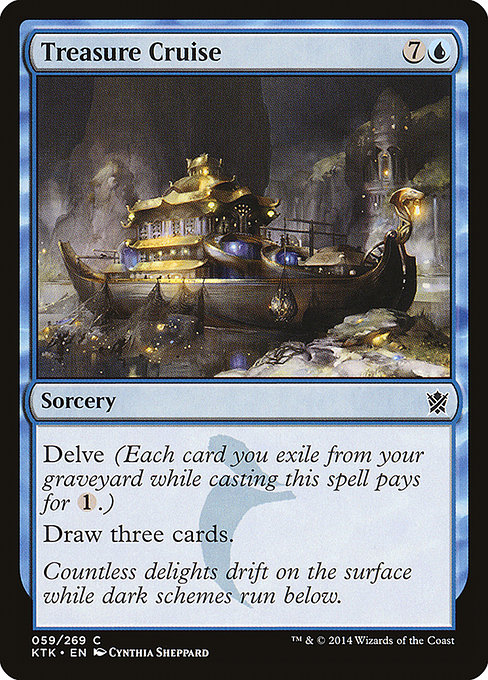
Blue-red Delver decks powered by Treasure Cruise's cheap delve card draw had been so successful at tournament play that they were hurting the diversity of the format.
Announcement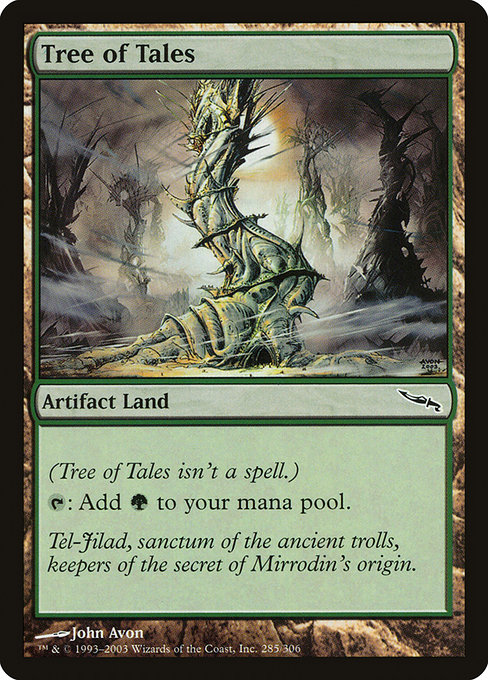
Banned since the format's creation along with the other Mirrodin artifact lands, which gave Ravager Affinity - one of the most powerful Standard decks of all time - tons of free fuel and combine just as powerfully with metalcraft. Wizards preferred banning the lands, the piece that breaks in both contexts, over banning Arcbound Ravager or Disciple of the Vault.
Announcement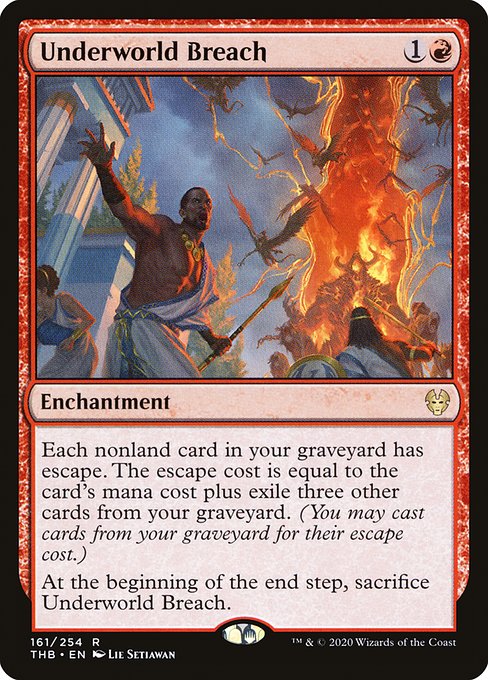
The Temur Grinding Breach combo deck, pairing Underworld Breach with Grinding Station and zero-mana artifacts to win via Thassa's Oracle or Grapeshot as early as turn one, had become the strongest thing to do in Modern. The deck was notoriously resistant to graveyard and artifact hate, making it uniquely difficult to answer.
Announcement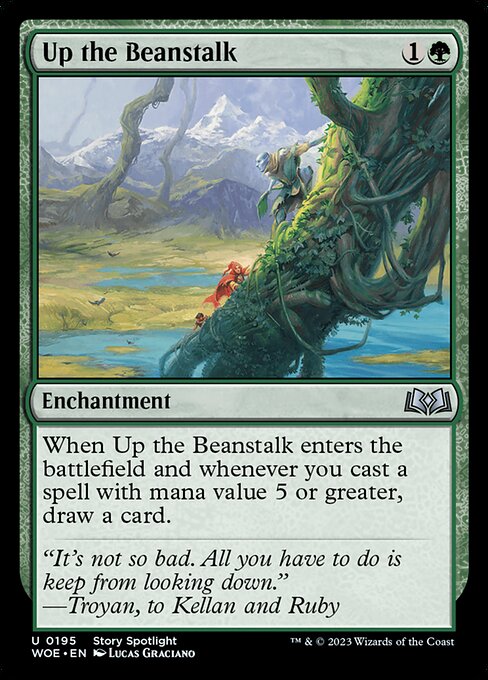
Banned for subsidizing many cards in the format costing five or more mana - it replaces itself immediately and keeps drawing cards off free spells like the evoke elementals, making it remarkably difficult to interact with profitably.
Announcement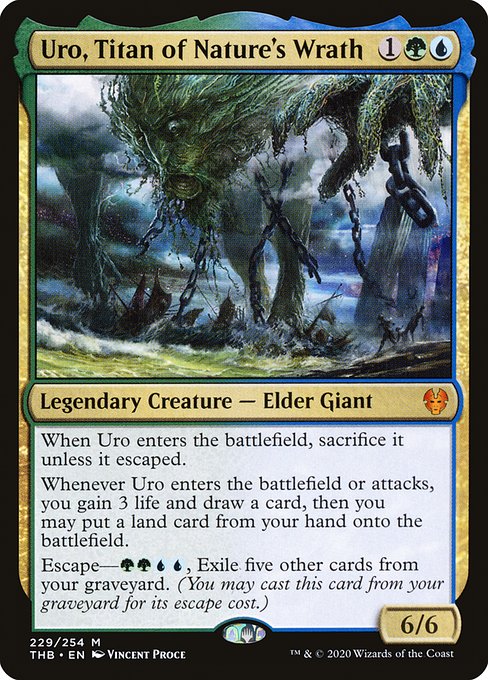
Uro operated at a power level that made it difficult for other midrange and control strategies to compete. It was banned to open space in the metagame for a greater variety of slower strategies.
Announcement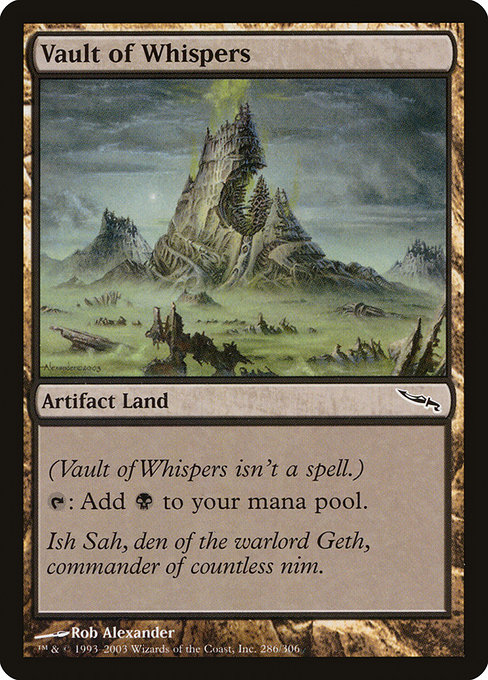
Banned since the format's creation along with the other Mirrodin artifact lands, which gave Ravager Affinity - one of the most powerful Standard decks of all time - tons of free fuel and combine just as powerfully with metalcraft. Wizards preferred banning the lands, the piece that breaks in both contexts, over banning Arcbound Ravager or Disciple of the Vault.
Announcement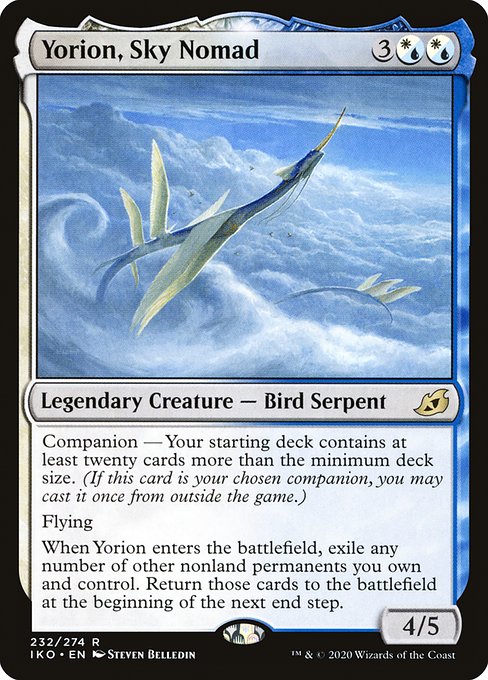
The Four-Color Omnath deck built around Yorion was a strong and increasingly popular performer, while the 80-card decks it demands are physically cumbersome to shuffle and operate. Wizards also cited its repeated blink triggers creating repetitive gameplay patterns and long games with lots of downtime.
AnnouncementMay 18, 2026 · 2
Banned to weaken the Amulet Titan combo deck, where it enabled mana loops with cards like Aftermath Analyst and Shifting Woodland - as the only Modern land that taps for three mana without other cards involved, it let the deck begin executing its combo from fewer resources. The resulting drawn-out, non-deterministic combo turns also created tournament logistics problems.
AnnouncementBanned because its pairing with Arena of Glory in Boros Energy decks proved game-warping, threatening massive damage or recurring Titan triggers from the graveyard while gaining life, with the deck playing progressively more copies of Arena of Glory. The combination compressed variation across aggro and midrange strategies.
AnnouncementMarch 31, 2025 · 1
The Temur Grinding Breach combo deck, pairing Underworld Breach with Grinding Station and zero-mana artifacts to win via Thassa's Oracle or Grapeshot as early as turn one, had become the strongest thing to do in Modern. The deck was notoriously resistant to graveyard and artifact hate, making it uniquely difficult to answer.
AnnouncementDecember 16, 2024 · 3
Banned to weaken the dominant Boros Energy deck, where its energy payoff often amounted to an extra one to four mana in the early turns of the game. Because it saw play almost exclusively in that deck, banning it let Wizards pull back Boros Energy without eliminating the archetype.
AnnouncementAs a nearly free companion, Jegantha appeared in a large portion of Modern decks across many archetypes without meaningful deck-building cost. Wizards banned it because it reduced the pool of options players consider when building decks, pushing them to cut cards with duplicate mana symbols rather than make real choices.
AnnouncementThe One Ring became a staple of Boros Energy and numerous other strategies at minimal opportunity cost, providing both self-protection and card advantage with no color commitment. Wizards noted its presence in events had become tiresome for many players.
AnnouncementAugust 26, 2024 · 2
Long maligned as one of the least fun parts of competitive Modern - starting the game down two or three cards from the one-mana ways it can be returned is 'quite brutal,' especially after a mulligan. It remained a format staple abused by Mono-Black Necrodominance, Esper Goryo's Vengeance, Living End, Rakdos Midrange, and others, so it was banned to make the format more fun.
AnnouncementThe Bant Nadu combo deck left Modern stagnant after Modern Horizons 3 - players knew a ban was likely, but also knew the best chance to win an event was playing Nadu, which Wizards called a poor experience for players, stores, and organizers. Nadu was banned for overshadowing much of what players could otherwise explore in the format.
AnnouncementDecember 4, 2023 · 2
Banned because its free evoke removal made playing creature decks nearly impossible, with Fury a dominant presence in Rakdos Evoke and Four-Color Omnath decks that suppressed creature-based strategies.
AnnouncementBanned for subsidizing many cards in the format costing five or more mana - it replaces itself immediately and keeps drawing cards off free spells like the evoke elementals, making it remarkably difficult to interact with profitably.
AnnouncementOctober 10, 2022 · 1
The Four-Color Omnath deck built around Yorion was a strong and increasingly popular performer, while the 80-card decks it demands are physically cumbersome to shuffle and operate. Wizards also cited its repeated blink triggers creating repetitive gameplay patterns and long games with lots of downtime.
AnnouncementMarch 7, 2022 · 1
Lurrus remained ubiquitous across multiple archetypes, contributing to the homogenization of Modern. Wizards judged that for too many archetypes the companion was not a trade-off but purely additive, with no significant deck-building cost.
AnnouncementFebruary 15, 2021 · 5
Banned because it creates repetitive and noninteractive game states in the late game for relatively low deck-building cost, reducing the diversity of gameplay patterns.
AnnouncementBanned because it creates repetitive and noninteractive game states in the late game for relatively low deck-building cost, limiting back-and-forth interactive gameplay.
AnnouncementBanned for speeding up fast combo decks such as Oops! All Spells, Charbelcher variants, and Tibalt's Trickery builds. Removing it gives opponents more time to set up interactive plays in the early game.
AnnouncementAlthough the decks built around it were not dominant, Tibalt's Trickery - particularly through its interaction with cascade - contributes to non-games that make Modern less fun to play.
AnnouncementUro operated at a power level that made it difficult for other midrange and control strategies to compete. It was banned to open space in the metagame for a greater variety of slower strategies.
AnnouncementJuly 13, 2020 · 1
Multicolor 'good stuff' decks built around Arcum's Astrolabe rose in popularity because one Astrolabe often meant excellent mana for the rest of the game without costing a card. Wizards concluded it added too much to those decks for too little cost, producing unhealthy and unsustainable results.
AnnouncementMarch 9, 2020 · 1
Once Upon a Time became one of the most played cards in Modern, letting several of the most popular and winningest decks enact their early-game plans far more reliably than other archetypes, leading to less divergent gameplay. Wizards also cited the ongoing design constraint of a free spell that makes creature and land combinations too easy to assemble.
AnnouncementJanuary 13, 2020 · 2
Its combination with Karn, the Great Creator, popular in Eldrazi and Tron decks, can completely lock the opponent out of casting spells. Because the deck-building cost of including the interaction is low, it showed up more often than is fun for the format.
AnnouncementOko became the most played card in competitive Modern and powered blue-green Urza decks with winning matchups against nearly every other popular deck. It was banned for reducing both metagame diversity and the diversity of gameplay patterns.
AnnouncementAugust 26, 2019 · 1
Even after Bridge from Below was banned to weaken it, the Hogaak graveyard deck kept an oppressive effect on the metagame. Given the variety of successful builds, Wizards concluded Hogaak itself was the crux of the problem.
AnnouncementJuly 8, 2019 · 1
Banned to weaken the Hogaak Bridgevine graveyard deck, which warped the metagame around itself despite heavy anti-graveyard hate. Wizards singled out Bridge from Below because it costs no mana or resources to use, making it the card most likely to cause imbalance again as new graveyard synergies are printed.
AnnouncementJanuary 21, 2019 · 1
Ironworks combo posted more individual-play Modern Grand Prix Top 8 finishes than any other archetype despite being a modest portion of the field, and Wizards concluded it posed a long-term threat to competitive Modern. Its highly polarized game-1 performance, long turns, and excessively arcane rules interactions were cited as secondary factors.
AnnouncementJanuary 9, 2017 · 2
Gitaxian Probe increased the number of third-turn kills, particularly by giving perfect information and a replacement card to decks deciding whether to go all-in, which hurt reactive decks' ability to bluff. Wizards concluded the card did too much for too little cost.
AnnouncementDredge pushed Modern too far toward a battle of sideboards, and with the printing of Cathartic Reunion and Prized Amalgam the deck once again became unhealthy for the format. Wizards re-banned Grave-Troll, noting the real offender has always been the dredge mechanic itself.
AnnouncementApril 4, 2016 · 1
Eldrazi decks dominated after Pro Tour Oath of the Gatewatch, taking six of that event's Top 8 slots and fourteen of 24 Grand Prix Top 8 finishes one March weekend, powered by the mana acceleration of Eye of Ugin and Eldrazi Temple. Wizards banned Eye of Ugin rather than Eldrazi Temple because the remaining builds would be more diverse and beatable.
AnnouncementJanuary 18, 2016 · 1
The Amulet Bloom deck frequently won before the fourth turn, generating seven mana on turn two via Amulet of Vigor, Summer Bloom, and bounce lands to end games quickly with Primeval Titan or Hive Mind. Summer Bloom was banned to reduce the frequency of those very early wins.
AnnouncementJanuary 19, 2015 · 3
Over the preceding year Birthing Pod decks had won significantly more Grand Prix than any other Modern deck while suppressing other strategies. It was banned to restore diversity among midrange creature decks.
AnnouncementBanned alongside Treasure Cruise because the two delve draw spells were easy replacements for one another in the dominant blue-red Delver decks, so removing only one would not have fixed the format.
AnnouncementBlue-red Delver decks powered by Treasure Cruise's cheap delve card draw had been so successful at tournament play that they were hurting the diversity of the format.
AnnouncementFebruary 3, 2014 · 1
Black-green attrition decks were among Modern's best performers, and Deathrite Shaman gave them mana acceleration that stayed powerful at all stages of the game, letting them trade one for one too efficiently. Wizards banned it because a dominant attrition deck made synergy-based decks hard to play and to leave more room for innovation.
AnnouncementApril 22, 2013 · 1
The Eggs deck used Second Sunrise loops to take single turns of fifteen minutes or more, causing rounds at large tournaments to run significantly long. The DCI banned Second Sunrise as the narrowest change that would reduce those long turns without hitting cards used in other decks.
AnnouncementJanuary 28, 2013 · 1
Storm had become a top-tier deck with frequent turn-three wins, contrary to the DCI's stated goals for the format. Seething Song was banned as the most efficient and reliable fast mana enabling those kills while not being one of the cards that makes the deck unique.
AnnouncementDecember 20, 2011 · 1
Combined with Grove of the Burnwillows, Punishing Fire gave a repeatable 2 damage for three mana that was devastating to creature decks relying on creatures with less than 2 toughness, such as tribal 'lord' decks. The DCI banned it as a major barrier to aggressive-deck diversity.
AnnouncementSeptember 20, 2011 · 4
Blazing Shoal infect decks exiled cards with converted mana cost nine or more to deliver turn-two and turn-three kills, usually through Inkmoth Nexus or Blighted Agent, too consistently. This violated the format's goal of not having top-tier decks that consistently win on turn three or earlier.
AnnouncementThe threat of facing Cloudpost decks that could generate fifteen or more mana each turn starting on turn four kept many other decks out of tournaments, greatly reducing the format's diversity.
AnnouncementA large number of blue-red combo decks kept the field less diverse, and Ponder and Preordain were the most widely used cards for finding their combo pieces. Banning them was meant to make those combo decks less efficient without removing them entirely.
AnnouncementRite of Flame was primarily used in combination decks to deliver very quick wins - at Pro Tour Philadelphia one such deck won nine of ten matches with extremely fast kills, conflicting with the format's goal of no consistent turn-three wins.
AnnouncementAugust 12, 2011 · 13
Banned since the format's creation along with the other Mirrodin artifact lands, which gave Ravager Affinity - one of the most powerful Standard decks of all time - tons of free fuel and combine just as powerfully with metalcraft. Wizards preferred banning the lands, the piece that breaks in both contexts, over banning Arcbound Ravager or Disciple of the Vault.
AnnouncementBanned since the format's creation as an extremely powerful fast-mana card - Wizards cited hard-to-beat first-turn starts like Chrome Mox into Dark Confidant or Bitterblossom and its role accelerating degenerate combo decks. It was judged to add too much speed to the format and make opening hands matter too much.
AnnouncementBanned since the format's creation because it combines with Vampire Hexmage to create a 20/20 indestructible flier for two mana, the core of one of the most dominant Extended combo decks (Thopter Depths). Wizards chose to ban the more offensive half of the pair, noting Vampire Hexmage has fair applications while Dark Depths has almost none.
AnnouncementBanned since the format's creation because Dredge was still capable of turn-three kills even with Golgari Grave-Troll banned, and the sideboard 'subgame' Dredge forces is unsatisfying for most tournament players. Wizards banned the most explosive graveyard card rather than leave that dynamic in the format.
AnnouncementBanned since the format's creation as the engine of the Elves combo deck, which used Nettle Sentinel, Heritage Druid, and cheap Elves to produce enormous amounts of mana while drawing unbounded cards. The deck consistently killed on turn three, violating the format's speed rule.
AnnouncementBanned since the format's creation along with the other Mirrodin artifact lands, which gave Ravager Affinity - one of the most powerful Standard decks of all time - tons of free fuel and combine just as powerfully with metalcraft. Wizards preferred banning the lands, the piece that breaks in both contexts, over banning Arcbound Ravager or Disciple of the Vault.
AnnouncementBanned since the format's creation because a three-mana cascade spell could cheat it into play as early as turn one or two, dumping enormous creatures like Emrakul, the Aeons Torn and Progenitus onto the battlefield. This clearly broke the format's rule against consistent turn-three kills.
AnnouncementBanned since the format's creation - of Modern-legal blue cards it was the most played in Legacy, and Wizards judged it especially damaging in Modern by 'sitting on' beatdown decks that need their turn-one plays to function.
AnnouncementBanned since the format's creation along with the other Mirrodin artifact lands, which gave Ravager Affinity - one of the most powerful Standard decks of all time - tons of free fuel and combine just as powerfully with metalcraft. Wizards preferred banning the lands, the piece that breaks in both contexts, over banning Arcbound Ravager or Disciple of the Vault.
AnnouncementBanned since the format's creation because tournament data from previous Extended formats showed Sensei's Divining Top takes too long to play with, dragging rounds to time and making events less fun for everyone.
AnnouncementBanned since the format's creation - Skullclamp was already banned in Legacy for being too powerful, and since Modern is a subset of the Legacy card pool, Wizards banned it in Modern as well.
AnnouncementBanned since the format's creation along with the other Mirrodin artifact lands, which gave Ravager Affinity - one of the most powerful Standard decks of all time - tons of free fuel and combine just as powerfully with metalcraft. Wizards preferred banning the lands, the piece that breaks in both contexts, over banning Arcbound Ravager or Disciple of the Vault.
AnnouncementBanned since the format's creation along with the other Mirrodin artifact lands, which gave Ravager Affinity - one of the most powerful Standard decks of all time - tons of free fuel and combine just as powerfully with metalcraft. Wizards preferred banning the lands, the piece that breaks in both contexts, over banning Arcbound Ravager or Disciple of the Vault.
Announcement